
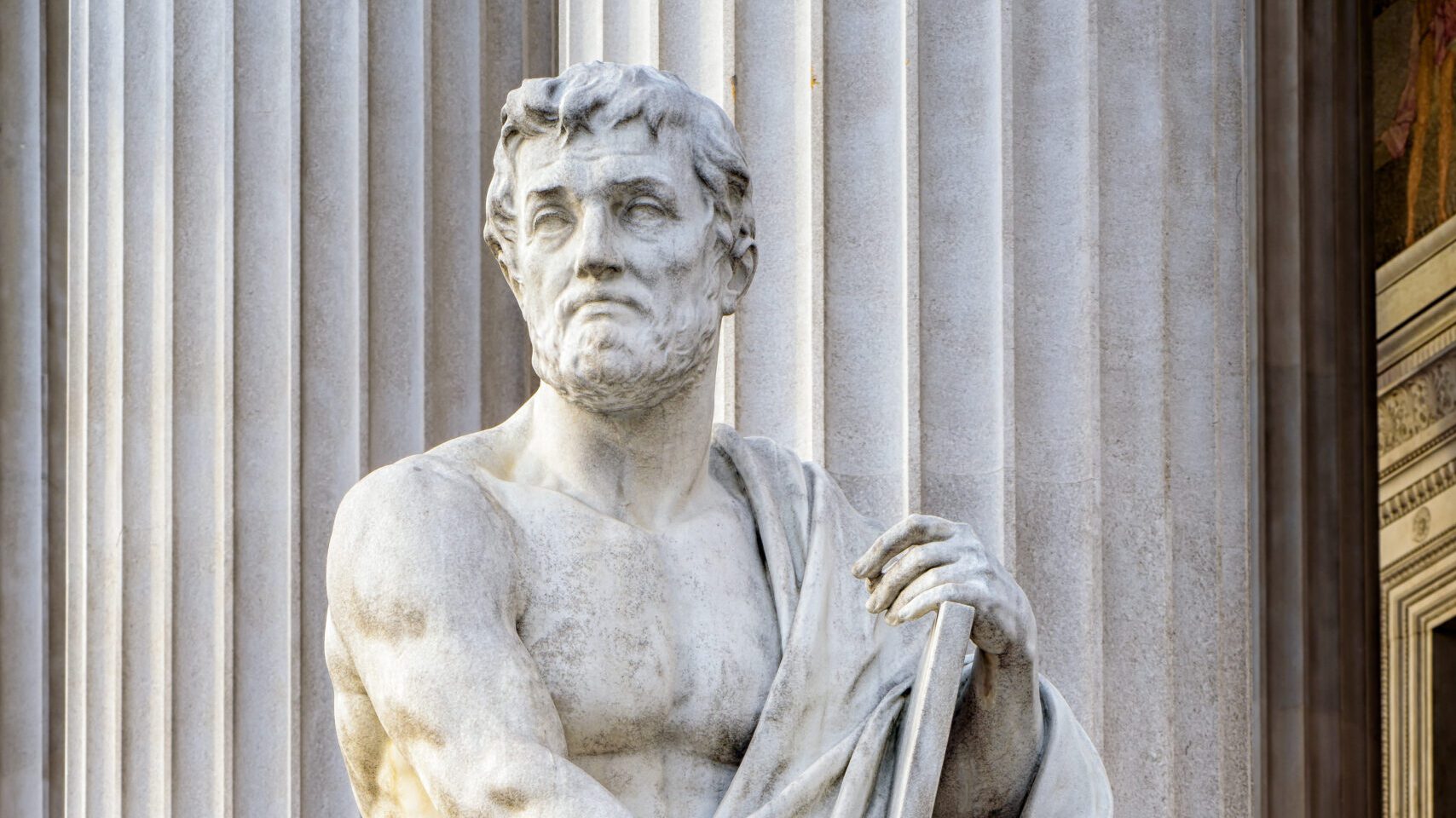
Publius Cornelius Tacitus (c. 56 – c. 120 AD) stands out as one of the most remarkable figures in Roman historiography. More than a recorder of events, he was a sharp observer of power, ambition, and the moral decline that often accompanies unchecked authority. Modern scholars regard him not simply as a historian but as a political thinker whose insights remain strikingly relevant.
Tacitus lived during what is often called the Silver Age of Latin literature, a period when style tended to be more elaborate, sometimes reflecting the turbulence of Roman society itself. Unlike the grandeur and balance of earlier Golden Age authors, Tacitus chose brevity and intensity, packing meaning into short, powerful sentences. His prose can feel abrupt or even harsh, but this was deliberate—it mirrored the corruption, suspicion, and brutality he saw in imperial politics. For Tacitus, form and content went hand in hand: the sharpness of his language echoed the sharpness of his critique.
His two great works, the Annals and the Histories, offer more than chronicles of emperors. They serve as moral reflections on the dangers of despotism and the erosion of freedom. In describing emperors like Tiberius, Claudius, and Nero, Tacitus was less interested in recounting every detail than in exposing the psychology of rulers and the complicity of those around them. He painted vivid portraits of fear, flattery, and ambition at the heart of the empire. Yet what makes Tacitus especially compelling is that he did not present history as black and white—his characters are complex, and his narratives often show how ordinary people are caught in the machinery of power.
The gaps in his surviving works—such as the missing four books of the Annals—are frustrating because they leave unanswered questions about crucial years in Roman history. Still, even in their incomplete form, these texts have shaped our understanding of the early empire. The Histories, with its account of the chaotic Year of the Four Emperors, is particularly gripping, almost like a political thriller where the stakes are nothing less than control of the known world.
Tacitus’s shorter works also reveal his range of interests. The Germania is not only an ethnography but also, in some ways, a mirror held up to Rome: by describing the supposed simplicity and bravery of Germanic tribes, Tacitus implicitly criticized Roman decadence. The Agricola, while a tribute to his father-in-law, also reflects on the cost of serving under a suspicious emperor. And the Dialogus de oratoribus mourns the decline of free speech, another theme consistent with his view that tyranny stifles both politics and culture.
What makes Tacitus enduring is his moral vision of history. He saw clearly that empires do not fall only because of external enemies but also because of internal decay—fear, corruption, and the loss of civic virtue. His works ask uncomfortable questions: What happens when power is concentrated in the hands of one person? How do citizens respond when liberty is traded for security? And can moral integrity survive in a corrupt system?
Reading Tacitus today, one cannot help but feel that his reflections go beyond Rome. His analysis of power and corruption resonates with modern politics, where ambition, fear, and propaganda continue to shape societies. In this sense, Tacitus is not merely a historian of the Roman Empire—he is a historian of human nature itself.
#Tacitus #RomanHistory #ClassicalLiterature #AncientRome #Historians #LatinLiterature #RomanEmpire #PhilosophyOfHistory #PowerAndCorruption #HistoryMatters