Home Blog Page 48

Baho ni Leila de Lima tungkol sa PDAF scam, Binulgar ni Atty. Levito Baligod

Bistado na, binulgar ni Atty. Levito Baligod ang pamimili ng Liberal Party sa mga indibidwal para kasuhan noon dahil sa pagkakasangkot sa PDAF scam o Priority Development Assistance Fund.

Ayon kay Baligod, si de Lima raw mismo ang nag-utos sa kanya para piliin lang ang mga taong kakasuhan noon na sangkot sa PDAF scam.

Si Levito Baligod ay ang dating abogado ni pork barrel scam whistleblower Benhur Luy.

source

Duterte hinahamon ng Debate ang kanyang mga Kritiko hinggil sa ICC Withdrawal Decision

President Rodrigo Duterte says he wants to debate with lawyers who insist that the International Criminal Court (ICC) can continue its preliminary examination on the country’s drug war.

Speaking at the League of Municipalities’ General Assembly Tuesday night, the President stressed his position that the ICC has no jurisdiction over him because the Rome Statute which created the Court is not even a valid law in the Philippines.

He said, “I’d like to debate with you. Paunahin ko pa kayo ng isang oras [I’ll let you go ahead by an hour]. We can continue with the investigation. Based on what? Why are you here? Why are you f*****g in my country? What is your power? What vests you, the treaty? The treaty was not published, when it is not published, it is as if there is no law at all.”

The President also criticized the qualifications of ICC prosecutor Fatou Bensouda who moved to begin a preliminary examination on him.

He took exception to the fact that Bensouda, who is now supposedly verifying facts in his drug war, is an expert on maritime issues.

“Sino ba naman gago ngayon na papayag na itong maritime law…You know, just to learn the definition of crime and the numerous, kaya mga abogado tayo, it took us four years to…And the multiple application of the law. Tapos bigyan mo ako ng maritime expert..Itong si Fatou?” he said.

[Translation: What kind of fool would allow this maritime law…You know, just to learn the definition of crime and the numerous, that’s why we lawyers, it took us four years to…And the multiple application of the law. And then you will give me a maritime expert…this Fatou?]

Duterte said he was withdrawing the country’s membership in the ICC after it said it would begin preliminary investigations on the war on drugs.

Presidential spokesperson Harry Roque said the ICC was free to conduct the probe, but that it should not expect the Philippines to cooperate.

source: CNN

Baka amagin: Panganiban sees three-year waiting period in VP poll protest

The Bongbong Marcos-Leni Robredo electoral protest drama will last at least three more years before the Presidential Electoral Tribunal (PET)–the Supreme Court (SC)–reaches any decision.

Former Supreme Court (SC) Chief Justice Artemio Panganiban came up with this estimate Sunday (December 18) in his Inquirer column.

Former senator Marcos is protesting his close loss last May to Vice President Leni Robredo. Seven months after the fact, Panganiban noted that the PET “has not even begun the revision of the ballots”.

“To do this, 1) the election documents will have to be gathered from all over the country by the Comelec with the help of the Armed Forces of the Philippines and the Philippine National Police, and 2) several revision committees—composed of regular and alternate revisors to be compensated from deposits to be paid by Marcos pursuant to PET rules—will have to be created,” he noted.

At the heart of Marcos’s petition is the supposed cheating that took place in 39,221 clustered precincts. He lost by around 260,000 vote for erstwhile Camarines Sur congresswoman Robredo.

“To revise or recount the ballots in the protested 39,221 clustered precincts (composed of 4.3 established precincts on the average) may take at least two years.

“Robredo’s counterprotest involving 8,042 clustered precincts in 13 provinces may require at least one year more,” the ex-chief magistrate reckoned.

“At this point, without judging the merits of the protest, the inevitable conclusion is that, in the normal course, it will take a few more years of hard work before we see light in the case. Incidentally, two of the brightest election lawyers are facing each other here—George Garcia for Marcos and Romulo Macalintal for Robredo,” wrote Panganiban.

The President and Vice President have a single six-year term.

source: politics.com.ph

PET Pinagpaliban at ni re-schedule ang recount hinggil sa Poll Protest ni Marcos

The Presidential Electoral Tribunal (PET) has postponed the ballot recount for the vice presidential poll.

Lawyers from both Vice President Leni Robredo and former Senator Bongbong Marcos’ camp confirmed this to CNN Philippines Wednesday. The PET relayed the rescheduling to their camps Tuesday afternoon.

The manual ballot recount will proceed on April 2 instead of March 19, former Senator Bong Bong Marcos’ lawyer Vic Rodriguez said.

“Unfortunately for us, yes, postponed again,” Rodriguez said, adding the PET said said only 42 of the 50 revisors have qualified or passed psychological examinations for the recount.

The revisons are part of a committee that will examine contested ballots in Camarines Sur, Iloilo, and Negros Oriental to determine the merits of Marcos’ electoral protest.

Beng Sardillo, Robredo’s lawyer, said the PET cited logistics as the reason for the delay.

Sardillo said it trusts the PET as the recount would be in their best interests.

“We trust the PET in these proceedings as it is in our best interest to finish this protest to quash any doubt about the choice of the Filipino people and the victory of Vice President Leni Robredo,” she said.

Just last February the PET issued a gag order on the poll protest, ordering both camps to stop discussing it in public.

Marcos filed the electoral protest against Robredo in June 2016, after he lost to Robredo by 263,473 votes in the 2016 elections — among the narrowest margins in the history of the country’s vice presidential elections.

To bolster his claims, Marcos recently revealed in January evidence of supposed poll fraud, pointing to square boxes found in some ballot images. Robredo, however, has denied allegations of vote padding and shaving.

source: CNN Philippines

Mocha Uson gustong matanggal ang mga Aquino sa 500 peso bill

Sa facebook page ni Asec Mocha Uson ay may suggestion at request siya sa ating pamahalaan lalong lalo na ang ating Banko Central ng Pilipinas na gustong matanggal na ang mga Aquino sa 500 peso bill at palitan ng tunay na bayani.

Hindi binanggit ni Mocha kung sino ang gusto niyang matanggal sa 500 peso bill, pero alam naman nating lahat na ang mga Aquino ang nasa peso bill lalo na si Ninoy, kung bakit nasa 500 peso bill eh hindi naman naging bayani ng ating bansa.

Hindi rin binanggit ni mocha kung sino ang dapat ipalit na bayani, kahit sino pang bayani ang ipalit, basta ito ay isang tunay na bayani na nagbuwis ng buhay at nakipaglaban para sa ating bansa.


Bishops hit Duterte’s withdrawal from ICC

The Philippine government’s intention to withdraw from the International Criminal Court (ICC) provides strong basis for investigation into its ruthless war on drugs, Catholic bishops said.

The withdrawal comes about a month after the court opened an investigation into the alleged extrajudicial killings and other atrocities committed under President Rodrigo Duterte’s crackdown on illegal narcotics trade.

Manila Auxiliary Bishop Broderick Pabillo said the country’s commitment to human rights in the international community cannot just be set aside by the President alone.

“This shows that there is basis for the investigation on him,” Pabillo said. “They are afraid of accountabilities. Duterte should be investigated.”

Duterte yesterday said the country will withdraw from the ICC, accusing it and the United Nations of bias and violating due process and constitutional presumption of innocence.

But for the bishop, it’s clearly an attempt to evade liability.

“The Philippines is not Duterte,” he said.

Bishop Arturo Bastes of Sorsogon, for his part, said Duterte’s action is a sign that he’s afraid of a “possible conviction”.

“His withdrawal from the Rome Statute of the ICC is an act of cowardice, which makes his name more infamous,” he said.

source: cbcpnews

P4.16-T loans under Aquino Administration saan nga ba napunta? – FDC

After revealing that the Aqui­no administration incurred a record P4.16-trillion debt in just five years, the Freedom from Debt Coalition (FDC) is now demanding that the gov­ernment make a public ac­counting on how it used the borrowings to improve the lives of the Filipino people.

“A detailed explanation by the government is long over­due on how the loans were contracted, where they went, how they were used and what became of the programs and projects on which they were supposedly spent,” the FDC said.

Earlier, Finance Secretary Cesar V. Purisima, seeking to rebut the budget and debt watchdog for claiming that the President has become the biggest loan addict among Philippine chief executives, said the current administra­tion has been very active in the international capital mar­ket as part of its liability-man­agement program, enabling it to lengthen debt maturities at lower cost.

“Aquino not only failed to curb the country’s pover­ty and debt burden; he also turned out to be the biggest loan addict, ad was a total fail­ure in addressing the Philip­pines’s entrapment in a cycle of debt dependence,” the FDC had said.

Former Budget Secretary Benjamin Diokno expressed surprise over the administra­tion’s penchant for borrowing.

“We have enough mon­ey internally to finance all our requirements and we have enough money to pay for our debt. It is not advis­able to borrow money from abroad,” he said.

Diokno, now an econom­ics professor at the University of the Philippines, also not­ed that the country’s current gross international reserves (GIR) were not only “healthy and hefty” but that “we are assured of a steady inflow of $25-billion to $26-billion overseas remittances yearly,” not to mention the “grow­ing inflows from expanding business-process outsourcing (BPO) industry.”

On Feb. 18, the govern­ment again borrowed $2 bil­lion in 25-year US dollar-de­nominated global bonds, with an interest rate of 3.7 percent, the lowest coupon ever issued by the country to date.

In trying to explain the borrowings, the government said it has been using these to retire debts while taking advantage of the low interest rates as a result of the series of credit-rating upgrades the country has obtained.

The most recent borrowing, however, will have $ 1.5 billion to be used to pay existing bonds under a buy-back offer while the balance will go to plugging the budget deficit.

The FDC, unconvinced of the recent pronouncements of Malacañang, challenged the Aquino administration to “immediately take steps” to repeal the Automatic Appropriations Law (AAL) for debt servicing, which was enacted through Presidential Decree 1177 issued way back in 1977 during the martial law years of President Ferdinand E. Marcos and perpetuated by the 1987 Revised Administrative Code.

“This Marcosian law has been a major concern, as the Philippines remains the only country in the world with such a rider in its government budget, said Ed Tadem, FDC president. “From the borrowings of Marcos to Aquino, the Philippine debt urgently deserves closer scrutiny and critique, especially since many of the dictator’s debts have been paid along with fraudulent loans of successive administrations.”

FDC explained that with the government’s claim of “sound” borrowings and liability management strategy, it has no more need to assure lenders that it would automatically appropriate payments for debt service first before it divides whatever remains of the budget pie among social and economic services.

FDC said automatic appropriations for debt servicing has long undermined a democratic budget process and the people’s power of the purse, from Marcos’s time until the present administration.

“Aquino has the obligation to explain to the Filipino people why an average of 48.2 percent of the government’s yearly borrowings from 2011 to 2015 automatically went to the amortization of existing debts, while an annual average of 15.6 percent of the national budget was allocated first to interest payments before appropriations were made for programs, projects and activities, FDC said.

FDC also said Aquino will also leave his successor with P6.4 trillion in national government debt, P4.16 trillion of which was borrowed during his term. This translates to a debt of P66,486.26 for each of the estimated 103 million Filipinos this year, including government-guaranteed liabilities, FDC said.

Purisima, disputing FDC, said that, “using nominal figures to talk about debt is as misguided as it is disingenuously detrimental to the quality of public discourse on public finance.”

The focus when talking about debt is sustainability “or the ability to pay back the borrowed money, thus, the important measurement is debt as a percentage of GDP (gross domestic product),” he said.

“During the Aquino administration, fiscal consolidation has led to a well-managed deficit, which eased financing requirements, translating to lower growth in national government liabilities compared with the size of the economy,” he said.

Purisima said that of the end of last year, the country posted a debt-to-gross domestic product (GDP) ratio of 44.8 percent, the lowest since 1996.

“In fact, for the first time since the early 1980s, the debt-to-GDP ratio fell below 50.0 percent in 2013, a far cry from the year 2004, when the ratio was at a high of 74.4 percent,” he said.

Purisima said that in comparison, the debt-to-GDP ratio of the US stood at 96.1 percent in 2013, 196 percent for Japan in 2012 and 55.1 percent as of 2012 for Germany.

Purisima said that if the country’s liabilities included those of social-security institutions and local government units (LGUs), the proportion of the liabilities of the government to the country’s total output would be 36.4 percent in 2014, lower compared to the 44.3 percent in 2009 and lowest since earliest comparable data in 1998.

Including liabilities of government-owned and -controlled corporations (GOCCs) and government financial institutions (GFIs), the Outstanding Public Sector Debt as of end-September 2015 stood at 55.8 percent, the lowest since the earliest comparable period or in 1998, the finance secretary said. “This is a 15.1-percentage point improvement from the 70.9 percent posted in 2009, and is worlds apart from when it was at its peak in 2003, at 111.6 percent.”

Purisima said the government’s budget is not only being used for current programs but future programs and potential growth of the economy.

“Relying solely on the current level of revenue generation to finance the budget creates a dangerous restraint to growth, is uncommon (there are only five countries in the world without debt), and ultimately unwise for most. This provides the impetus for maintaining a sustainable growth,” Purisima said.

source: Luis Leoncio / marketmonitor.com.ph


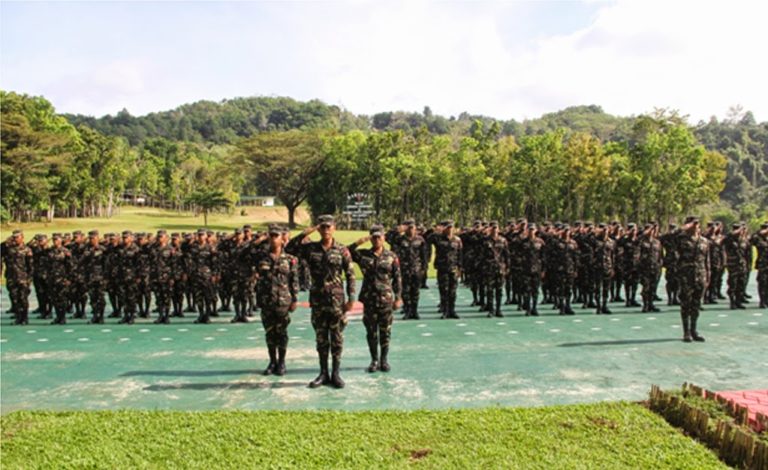
Mandatory Military Service Ipapatupad under Senate Bill No. 1734

Many countries in the world have compulsory military service. Democratic countries such as Brazil, Denmark, Germany, Israel, Turkey, Russia, Mexico, Sweden, and South Korea are among the countries where men need to enter the military for several years.

Compulsory military service is normally for 18 to 35 years old men. The training and service last for one to three years. There are different kinds of service performed during the duration of the military service, from combat roles to logistics and intelligence work. Responsibilities are given, mostly depending on the gender of the personnel: in Israel, males perform three years of combat and security services while females perform two years of non-combat services.

Compulsory military service is believed to increase the strength of the military, the youth’s character, and the nation. Like the United States, the Philippines does not have mandatory military service. However, last March 8, Senator Panfilo Lacson filed the Senate Bill No. 1734 which will affect the lives of people in the country.

[Image Credit: Wikimedia Commons]
[Image Credit: Wikimedia Commons]


What is the Senate Bill No. 1734?

Also known as the National Defense Act of 2018, the Senate Bill No. 1734 is the imposition of two-year mandatory military service in the Philippines. This seeks to improve the country’s capability to fight terrorism and other threats to national security.

Once approved, this law will cover natural-born or naturalized Filipinos.

In defending the Philippines, the paramount consideration shall be national sovereignty, territorial integrity, national interest and the right to self-determination. The preservation of the State is the obligation of every citizen. The security, freedom, and independence of the Philippines shall be guaranteed by the employment of all citizens, without distinction of age or sex, and all resources.

[Image Credit: Wikimedia Commons]
[Image Credit: Wikimedia Commons]

Larger Scope

Senate Bill No. 1734 does not only focus on military training and education for a minimum of two years mandatory military service, it also aims to upgrade the government’s capabilities against terrorism, insurgency, and other threats to national security viably streamlining the procurement process for defense equipment and prohibiting the sale of strategic defense real properties.

Under this bill, the name of National Defense College of the Philippines will be changed to National Defense University of the Philippines. It also allows the Defense Department to accept donations, contributions, and grants to purchase defense materials and equipment.

source

Senator Hontiveros wants government to control facebook

Senator Risa Hontiveros plans another bill regulating Facebook in the Philippines to curb online critics, CNN reported earlier today during The Service Road interview.

After submitting Safe Streets and Public Spaces Act of 2017, Hontiveros said she is eyeing on regulating the use of Facebook. Hontiveros did not give details whether she wants a total Facebook ban in the Philippines, or the other way around.

The Duterte government has recently banned porn sites like Redtube and Xvideos among others, and Hontiveros plans to do the same with Facebook.

Facebook, Twitter, and Instagram are among the top Social Media sites utilized by 99% of Filipino Internet users, and more than 80% of smartphone users according to the Philippine Statistics Office (PSO).

Hontiveros explained that many public personalities like her are being lambasted online through fake news and hoax articles. The senator said she wanted to “stop all of these craziness online” by regulating the use of Social Media sites. The senator however did not give detail on the said regulation will be implemented. /Carlos Sta. Mesa/

source

Philippines says new oil, gas discovery has commercial quantities

An oil field discovered in central Philippines in 2014 has been found to have commercial quantities of both natural gas and oil, the energy department said on Wednesday, that could boost domestic gas supply when existing reserves dry up in six years.

Energy Secretary Alfonso Cusi signed an agreement with Hong Kong-based China International Mining Petroleum Co Ltd, the service contractor that will develop the Alegria oil field in southern Cebu.

Alegria was found to have an estimated 27.93 million barrels of oil (MMBO), with a possible production recovery of 3.35 MMBO, or 12 percent of total oil in place, the Department of Energy said in a statement.

Alegria also has natural gas reserves of about 9.42 billion cubic feet (bcf), with the recoverable resource estimated at 6.6 bcf, or about 70 percent of total natural gas in place, it said.

Exploration and drilling activities on the oil field started in 2009.

The Philippines plans to rely on imported liquefied natural gas when its Malampaya gas field – in western Philippine waters – becomes depleted in 2024. Malampaya fuels around a fifth of the country’s power.

Though not as big as Malampaya which had about 2.7 trillion cubic feet of natural gas, Alegria’s gas will help boost supply in one of Asia’s fastest-growing economies where energy demand is expected to triple by 2040.

Based on the development plan crafted after the initial testing, the natural gas and oil production of Alegria field may last until 2037, the energy department said.

source