
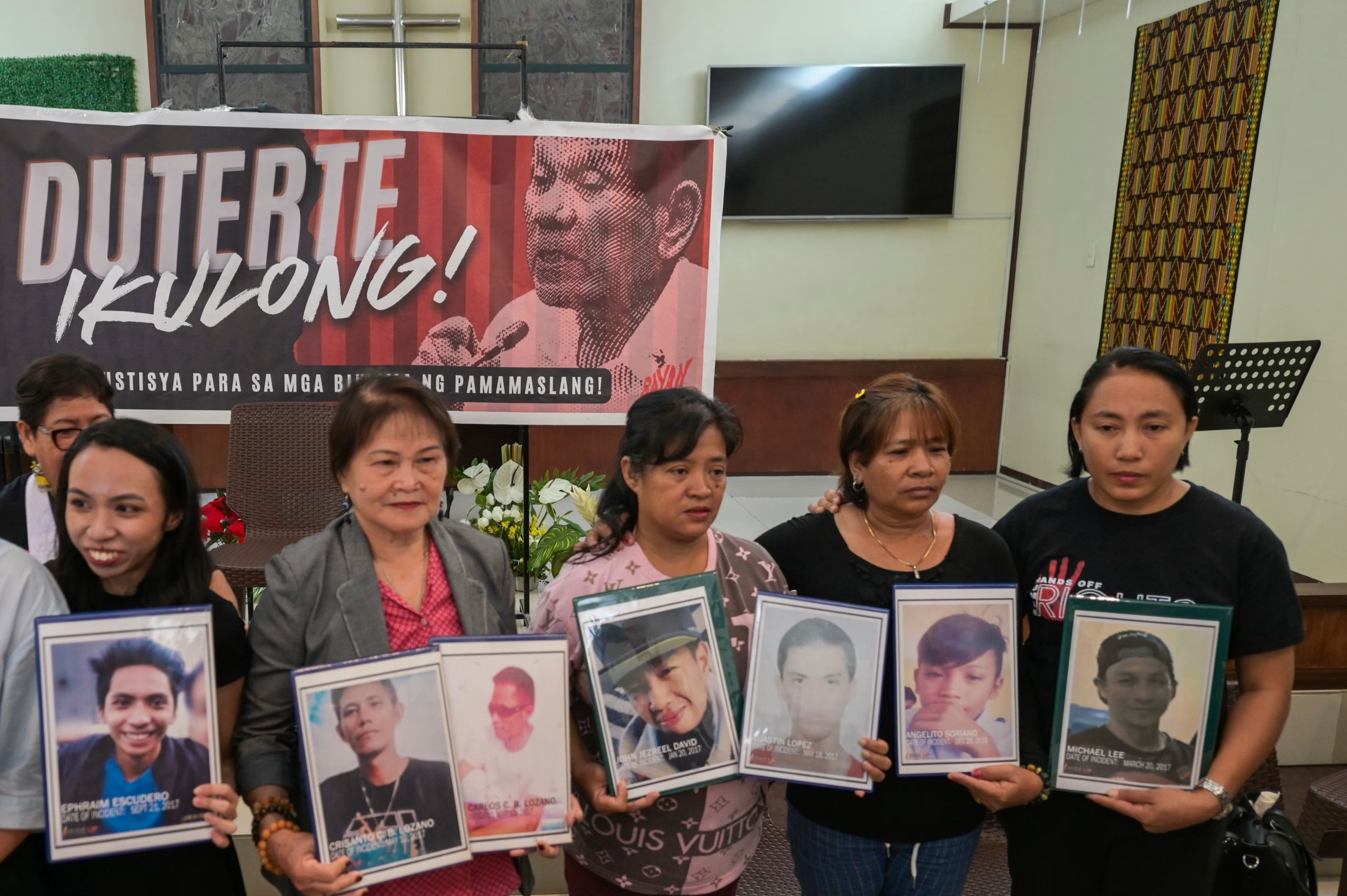
MANILA, Philippines — Victims of extrajudicial killings (EJK) during the Duterte administration’s war on drugs may seek reparations from the International Criminal Court (ICC) if a conviction is reached, an ICC-accredited lawyer said.
International law expert and lawyer Joel Butuyan explained that victims can present evidence of the damages they have suffered during the “reparation stage” of the trial. If the accused is found guilty, the court can award reparations from their recoverable assets.
“The damages awarded to victims will first be collected from any recoverable assets of the accused. There is also a legal remedy to request a freeze on the accused’s assets while the trial is ongoing,” Butuyan said during an online forum hosted by the Foreign Correspondents Association of the Philippines on March 17.
He added that individuals may file for the freezing of Duterte’s assets once the charges against him are confirmed, which is scheduled for September 23.
“It has to be after the confirmation of charges, not this early because the charges have not been confirmed,” he clarified.
If the accused has no recoverable assets, Butuyan noted that the ICC has a trust fund for reparations. However, he cautioned that victims should not expect large payouts, as the fund has limited resources.
“Reparations can take different forms, such as livelihood programs or activities provided to affected communities, rather than just monetary compensation,” he explained.
Aside from financial aid and livelihood assistance, the ICC may also offer psychological support and other forms of assistance to help victims’ families recover from the crimes committed.
Charges Against Duterte
Philippine government records indicate that Duterte’s war on drugs led to approximately 6,000 deaths. However, human rights groups estimate that the actual death toll may be as high as 30,000, with many victims being small-time drug users and pushers.
On March 14, the ICC charged Duterte with crimes against humanity, citing his alleged involvement in at least 43 killings. These include incidents attributed to the Davao Death Squad and police operations during his presidency.
The charges cover incidents that allegedly took place between November 1, 2011, and March 16, 2019.