Home Blog Page 5

Diwata, tatakbo sa 2025 election bilang representante ng Vendor’s party-list

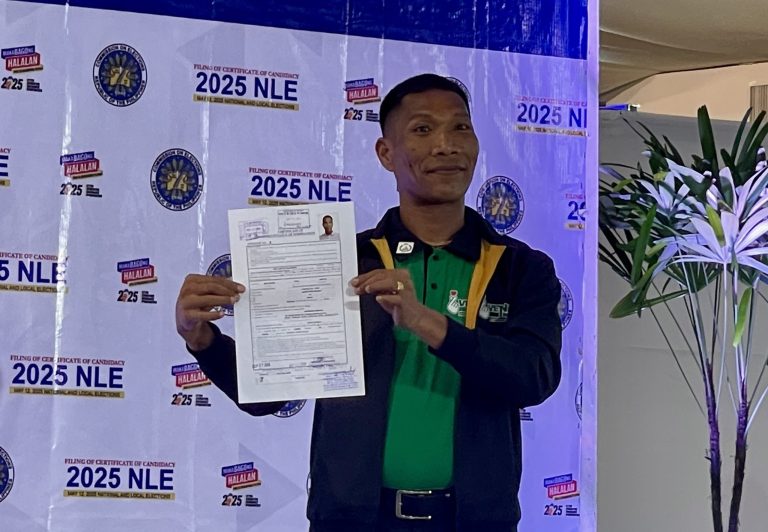
Panoorin: Social media personality Deo Balbuena, known as Diwata, files papers as the fourth nominee of the Vendors party-list group seeking to represent vendors’ causes. #Halalan2025 

Deo Balbuena, a viral food stall vendor popularly known as “Diwata,” arrived at Manila Hotel on Wednesday to file the Certificate of Nomination and Acceptance (CONA) for a vendor’s party-list.


Pagdinig sa kaso ni Pastor Quiboloy, Itatakda na ng Senado – Hontiveros

0

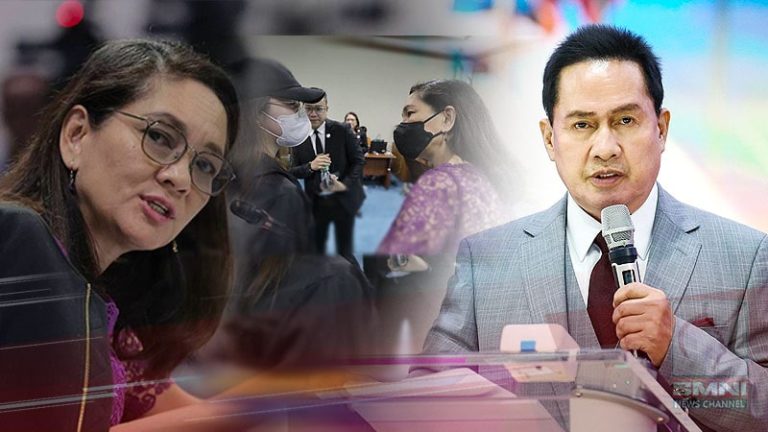
Tiniyak ni Sen. Risa Hontiveros na agarang magtatakda ng petsa ng pagdinig ang Senado para paharapin sa komite si Pastor Apollo Quiboloy upang masagot nito ang mga akusasyon laban sa kanya ng mga dating myembro ng Kingdom of Jesus Christ.

Ayon kay Hontiveros, mahalagang matanong ng personal si Quiboloy sa Senate Committee on Women, Children, Family Relations and Gender Equality ukol sa mga kaso nito.

Oras na makahanap anya ng petsa ang Senado para sa hearing, agad siyang susulat sa korte para mapaglabas ng arrest warrant laban kay Quiboloy.

Ex-Mayor Jed Mabilog Pinag-aaralang ilagay sa Witness Protection Program kaugnay sa War on Drugs ng Nagdaang Administrasyon

0

Dating Iloilo mayor Jed Patrick Mabilog, pinag aaralang ilagay sa Witness Protection Program.

Itoy kasunod ng pagbabalik Pilipinas ni Mabilog matapos ang halos pitong taong pagtatago sa ibang bansa dahil sa mga banta umano sa kanyang buhay.

Read: Mayor Mabilog, Drilon, Roxas named by top drug lord in Iloilo as alleged drug protectors

Ayon kay Justice Sec. Boying Remulla, sasailalim pa sa evaluation ang request ni dating Iloilo City Mayor Jed Patrick Mabilog.

Also Read: Iloilo Mayor Mabilog Faces Graft Charges Over Towing Project

Kabilang si Mabilog sa narcolist ni dating Pang. Rodrigo Duterte.

Nakatakda namang tumestigo sa Quad Comm hearing sa Kamara si Mabilog kaugnay ng umano’y nalalaman sa war on drugs ng nagdaang administrasyon.


NAIA Terminal 3 Faces Aircon System Issue Anew

0

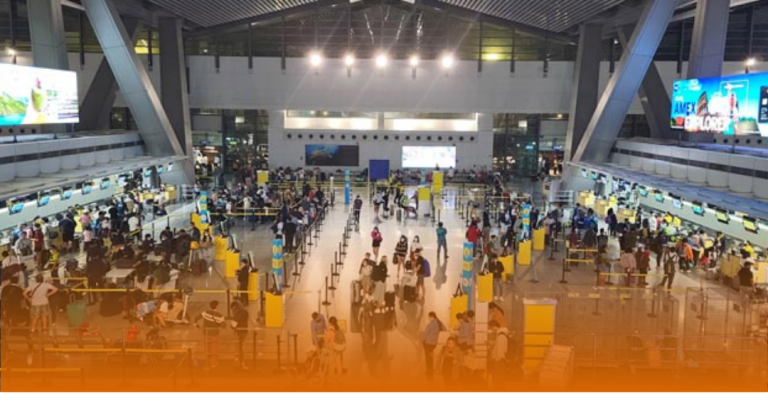
The cooling system at Ninoy Aquino International Airport (NAIA) Terminal 3 has been temporarily shut down. The Manila International Airport Authority (MIAA) reported that the terminal is experiencing higher temperatures due to a malfunction in its three chillers. To prevent further damage, MIAA has shut down the chillers for descaling, cleaning, and swabbing to restore their optimal performance.

MIAA General Manager Eric Jose Ines advised Terminal 3 users to wear light clothing, bring fans, and stay hydrated to cope with the warmer temperatures. Cooling fans have also been deployed to help reduce passenger discomfort. Repairs are expected to be completed by Saturday.


₱91 Million Flood Mitigation Project in Arayat Sinks

0

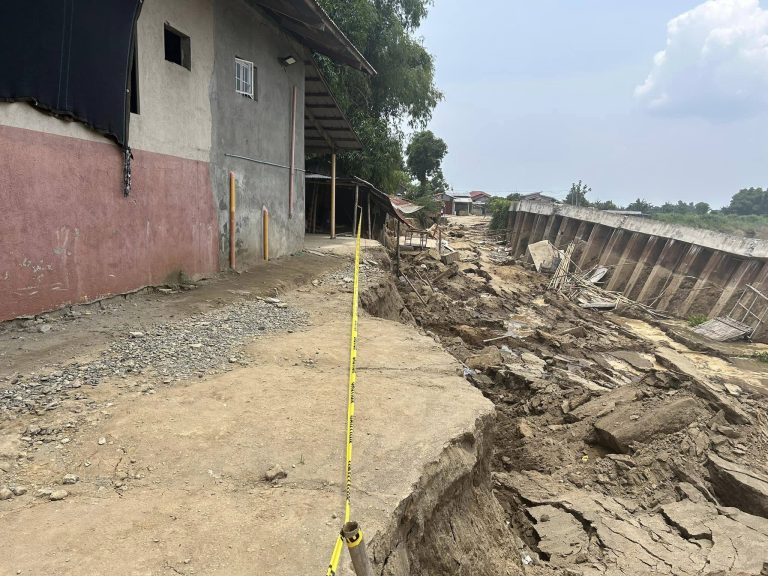
A P91-million NEWLY-CONSTRUCTED slope protection structure caved in Barangay Candating, Arayat, Pampanga on Saturday endangering the lives of residents in the area.

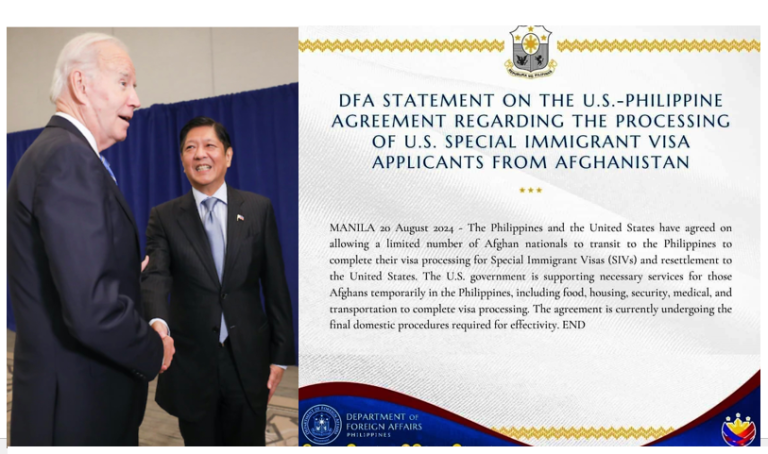
Aprobado ng Marcos Gov’t ang request ng US na papasukin sa Pilipinas ang mga Afghan Refugees

0

The U.S. request was brought to light last week by Senator Imee Marcos, chair of the Senate committee on foreign relations, who initiated a resolution to investigate the proposal.

Estudyante mula sa Batangas, humakot ng Gold Medal sa Siam International Math and Science Olympics 2024

Humakot ng mga gintong medalya ang isang estudyanteng Batangueño na si Sean Raffaele Plata, mula sa Stonyhurst Southville International School- Batangas, sa katatapos lang na Siam International Math and Science Olympics Final Round na ginanap sa Bangkok, Thailand.

Nakasungkit si Sean ng mga gintong medalya sa SIMSO Final Round kabilang na ang SIMSO Math – Gold Award, SIMSO Science- Gold Award, Simsolver’s Cup Awards for being Gold in Math and Science, at SIMSO Math Overall Award- First Runner Up.

Ang naturang kompetisyon ay nilahukan ng ibat-ibang bansa mula sa Taiwan, Thailand, Cambodia, Hong Kong, Indonesia at Pilipinas.

| BChannel News

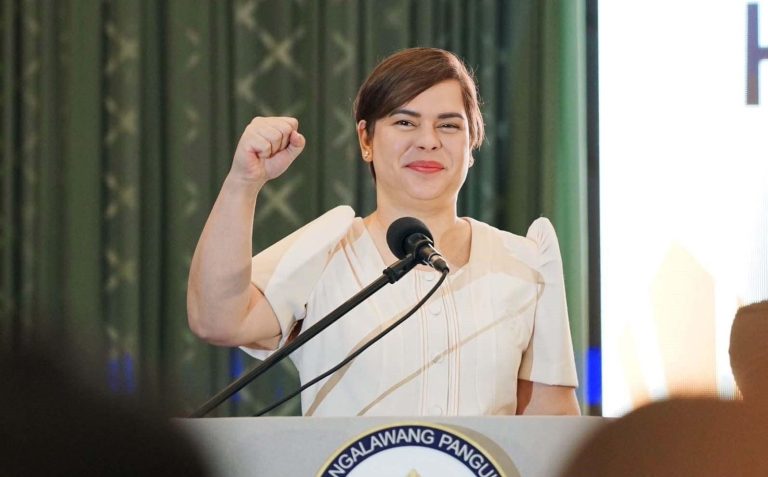
VP Sara Duterte Accepts Drug Test Challenge

MANILA, Philippines – Vice President Sara Duterte has accepted former presidential spokesman Harry Roque Jr.’s challenge to undergo a hair follicle drug test.

Roque issued the challenge following the introduction of a bill by the vice president’s brother, Davao City Rep. Paolo Duterte. The bill requires all elected and appointed government officials, including the President, to undergo hair follicle and urine drug tests 90 days before election day.

“They must not only prove that they are drug-free, but they must also demonstrate that they are in the right frame of mind to lead the country during these challenging times,” Roque said.

In a chance interview with reporters in Davao City on Thursday night, Duterte confirmed that she accepted Roque’s call for a drug test.

“Oh yes, I read the call of the people, and I will arrange the schedule, as a third party should be involved in the testing, and there should also be at least one laboratory to ensure that the results are validated,” Duterte said in Filipino.

She also expressed her support for her brother’s bill, stating that it would ensure all public officials, including herself, are of “right mind.”

However, several lawmakers have criticized the proposal, raising concerns about potential constitutional issues and accusing it of pushing a “specific agenda” to target a particular government official.

Bong Bong Marcos continues to evade $353-million contempt judgment of US court

0

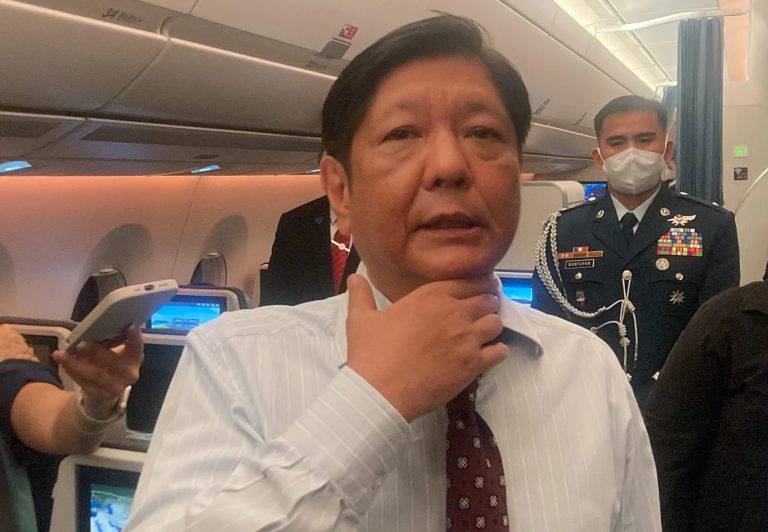
President Ferdinand “Bongbong” Marcos Jr.’s continued evasion of the $353 million contempt judgment from a U.S. court is a long-standing issue that ties into the broader historical and legal controversies surrounding the Marcos family. The judgment, which remains unpaid, stems from a case brought by victims of human rights abuses during the martial law era under the rule of his father, the late dictator Ferdinand Marcos Sr. This period in Philippine history was marked by widespread human rights violations, including extrajudicial killings, torture, and the suppression of civil liberties. The U.S. court’s ruling specifically addresses contempt in relation to the Marcoses’ refusal to comply with earlier rulings regarding compensation for these victims.

The case itself originated from a class-action lawsuit filed in the 1990s by nearly 10,000 victims of human rights abuses. In 1995, a U.S. court awarded these victims a massive $2 billion judgment against the estate of Ferdinand Marcos Sr. for damages. However, in the years that followed, the Marcos family reportedly did little to settle these claims, leading to further contempt charges and the subsequent $353 million judgment.

Despite multiple legal attempts to enforce this ruling, the Marcos family has largely evaded responsibility. Legal mechanisms for holding the family accountable in the Philippines and internationally have proven difficult, as Bongbong Marcos, now president, enjoys the immunity granted to a sitting head of state. This immunity complicates efforts to hold him personally accountable for the U.S. court’s ruling, despite his role in managing the family’s assets and estate.

Under international law, the sovereign immunity principle protects sitting presidents from prosecution in foreign courts. This has allowed Marcos Jr. to avoid the contempt judgment while in office, but it remains unclear how long this shield will last, especially after his presidency.

Additionally, efforts to enforce the judgment face practical challenges, such as the location and accessibility of the Marcos family’s assets. Many of these assets are believed to be hidden or dispersed globally, further complicating attempts at collection. Previous efforts to locate and seize these assets have been met with resistance and complex legal battles, both in the Philippines and abroad.

Meanwhile, the case continues to be a thorny issue for Marcos Jr.’s administration. His silence on the matter has been seen by critics as an attempt to distance himself from the abuses of his father’s regime. However, the unresolved judgment is a stark reminder of the dark legacy that still haunts the Marcos family and its place in Philippine politics.

For many Filipinos, the evasion of this judgment represents a broader pattern of unaccountability within the Marcos family. It raises concerns about justice for martial law victims and the rule of law in the Philippines, as well as the broader implications for human rights accountability.

In the international context, the Marcoses’ ability to evade such a significant legal ruling also brings up questions about the strength of international justice systems and the mechanisms available to hold powerful political families accountable. While some legal experts argue that the judgment could still be pursued in the future, the process is fraught with challenges that highlight the limitations of cross-border legal enforcement.

Ultimately, this contempt judgment serves as a symbolic reminder of the ongoing struggle for justice faced by the victims of martial law and their families. As long as the Marcos family remains in power and the ruling remains unenforced, it will continue to be a highly sensitive and polarizing issue in Philippine society and politics.
China Firm on Rejection of South China Sea / West Philippine Sea Arbitration Award

0

BEIJING — China has reiterated its firm stance on rejecting any claims or actions arising from the South China Sea Arbitration arbitral tribunal.

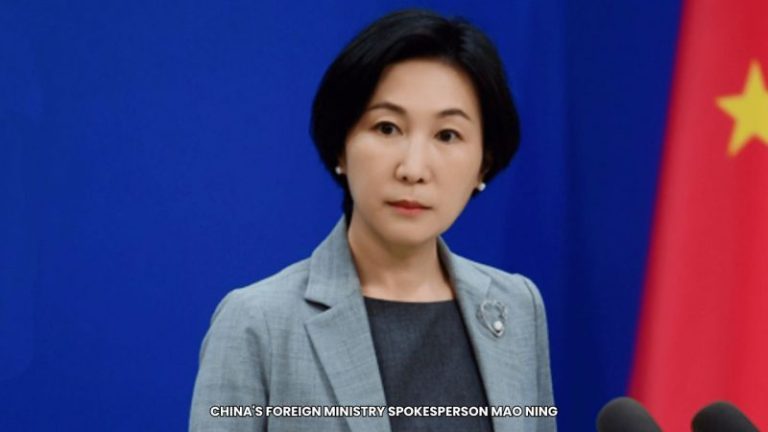
“China’s stance on the arbitral award in the South China Sea is consistent and clear. The arbitral tribunal in the South China Sea Arbitration exceeded its jurisdiction and issued an illegitimate ruling. The resulting award is deemed illegal, null, and void,” said China’s Foreign Ministry spokesman Mao Ning during a press conference on May 31.

Mao Ning emphasized that the award is not recognized as part of international law and has harmed the international rule of law. “China neither accepts nor recognizes the award and will never accept any claim or action arising from it,” she stated. Mao Ning asserted that China’s stance aims to uphold the integrity and authority of UNCLOS (United Nations Convention on the Law of the Sea) and the international rule of law.

“China’s position has received understanding and support from the international community. Fair-minded individuals worldwide have criticized and questioned the arbitral award,” she added.

On May 21, the International Tribunal for the Law of the Sea (ITLOS) delivered an advisory opinion concerning the obligations of State Parties to UNCLOS regarding the impact of their climate change response on the marine environment. The opinion partly referenced the South China Sea Arbitration award.

ITLOS is an intergovernmental organization created by the Third United Nations Conference on the Law of the Sea mandate. Established by UNCLOS, signed in Montego Bay, Jamaica, on December 10, 1982, the convention entered into force on November 16, 1994, establishing an international framework for ocean space, its uses, and resources.

On May 25, the Philippines welcomed the advisory opinion issued by ITLOS, which recognized critical parts of the 2016 South China Sea arbitration ruling as “authoritative.” The Philippines, as a state party to UNCLOS, participated in the proceedings to support small island states’ call for protection against climate change’s impact. The Department of Foreign Affairs stated, “This bolsters and reinforces the legitimacy of the final and binding 2016 Arbitration Award and its unassailable status as part of the corpus of international law.”

The 2016 arbitration ruling upheld the Philippines’ exclusive economic zone over China’s historical claims in the disputed South China Sea under UNCLOS, although China has never recognized the decision.

Mao Ning argued that the ITLOS advisory opinion focused on climate change response and marine environment protection and does not cover territorial and maritime disputes or the validity of arbitral awards on the South China Sea. She stressed that the advisory opinion should not be misused by countries for selfish gains. “Any hype that seeks to mislead the public will fail. They will not turn the null and void award into a legal one, nor could they weaken China’s resolve to defend our territorial integrity, maritime rights, and interests,” Mao Ning said.